How to Avoid Water Pressure Loss in your Shower?
How to Avoid Water Pressure Loss in your Shower? I bet you can’t stand that sudden disturbance when showering.
The water just stops when you’re rinsing your face with shampoo and soap, and all you can feel is the tapping of tiny drops of water in your head.
Annoying indeed.
Then you try to reach out for your diverter valve to swiftly twist it in an attempt to strengthen the water flow. And you turned it all the way, but still, there’s no luck.
It also happens in your toilet when it refuses to flush.
And both are real bummers.
But what if I tell you, there’s a way to solve this.
Yup! That’s right!
But before that, I suggest you assess the problem. Check both your house’s interior and exterior, and follow the pipelines. You might stumble on your hose hookups, your faucets, and your dishwasher.
And you’ll figure out that your problem could be coming from a restricted water flow from the source or maybe…
… a water pressure loss.
And this, my friend, is what we will be talking about in this article.
So buckle up!
Because we will be exploring the root cause of your problem, so you can finish your bath with ease!
1. Pressure Balancing Valve Limitations
Well, if you want to feel cozy when bathing, you must have a pressure balancing valve installed in your shower.
It is the mechanism that controls and regulates not just the water flow but also the temperature.
Amazing right?
But how?
The answer lies in how it manipulates the pressure at a certain level. And at that instance, it mixes the coldness and warmth of the water.
For instance, when you flush the toilet, there is a play of pressure and temperature on it. The cold water diverts to refill the toilet tank. And with this, the cold water line’s pressure is reduced.
And what happens next is how you get the right temperature.
So the valve operates to adjust and drop the pressure in your tank’s water.
And this would take a while.
And when the valve restricts the flow of the cold water, only the hotter water can pass through. So, you get that warm, cozy bath you so desire.
The valve can also regulate the warm water pipe’s water pressure to reduce or stop the system’s overall pressure.
What does it tell you?
When there is water pressure at play, there’s a high risk that the leading cause of the water pressure loss is this valve. It utilizes the fixtures to regulate the temperature and pressure, and this causes the interruption.
But luckily,
There’s a way to resolve this!
A thermostatic mixing valve.
Its operations are complex, but the gist is it separates the mechanisms of regulating the water’s temperature and pressure.
An entirely different way of handling it, but it still gives you the same result.
Plus, you can avoid the water interruption completely!
So, what are you waiting for?
Hurry up and dial your plumber’s number to give that shower valve a brand new upgrade!
2. Malfunctioning Diverter Valve
Some problems are small enough that you can’t immediately feel its presence until it is large enough to affect you directly.
Another technical stuff.
If you’re new to plumbing, these terms may not be familiar to you. However, I will tell you the functions and their role, and you’ll get the hang of it.
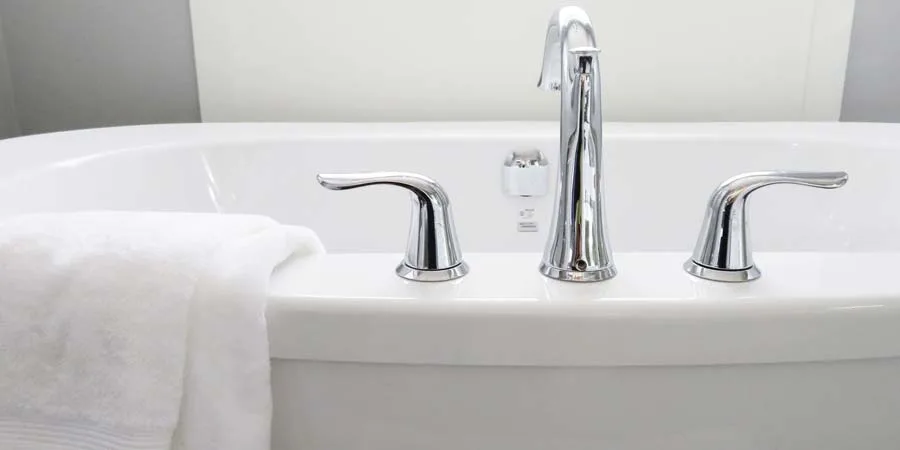
For instance, the diverter valve is another essential part of the shower system. You can see one if you have a joint bathtub and shower in your bathroom.
And so, you must be wary of its function!
Its role is to redirect the water flow from the tub’s faucet and bring it towards the shower head.
And the problem comes in when there is a malfunction or crack in the valve.
The truth is,
Over time, the diverter’s durability is tested, and the water’s pressure and the routine of using it regularly will break it.
And the result is the valve can’t fully function. It won’t provide the same opening to allow a fuller water transfer from the faucet to the shower head.
This is probably one of the leading problems once you have a tub and shower combo. This valve must be strong enough to provide the push to send the water upwards.
But you needn’t worry.
Here’s what you should do.
Ask for a diagnosis from your trusted plumber. If ever you find that this valve is the culprit, immediately replace it.
Then the work’s done.
3. Water Pressure Reduction Valve Needs Adjustment
There will be a time when you already checked all of the possible problems near the bathroom.
You’ve seen the valves and fixtures operating well, the pipes with water that are smoothly flowing– no breaks or cracks at all, and even inspected the shower head and faucets for possible clogging.
Yet, you remained clueless on the possible reason for water loss.
Well, let me tell you.
You missed a valve and the most important one at that.
You forgot to check…
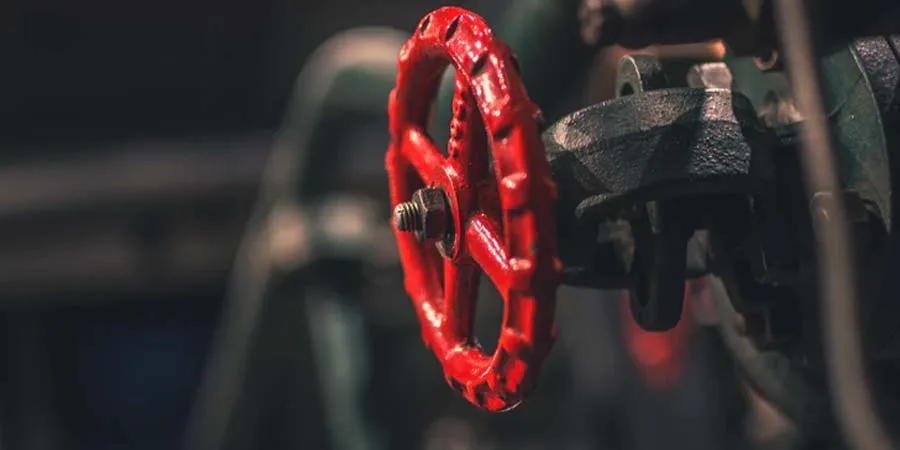
… the water pressure reduction valve.
The thing is,
When you have a problem with this valve, your entire waterways are affected, not only the shower or the tub faucets but as well as those in the kitchen or any water circulating in your pipelines.
And why is that?
Simply because this valve regulates the water from the source or the main water line. It controls the water flow and pressure before it reaches your home.
And just like any other components of your home,
This pipe will also turn weak over time as rust eats its plated steel handles, causing it to malfunction or break. In these instances, you’d rather replace it.
But most of the time, it only needs adjustment. Make sure to call your trusted plumber if ever you face this problem to see what he can do.
4. Broken or Obstructed Pipe
Among these water pressure loss issues, the problem you would certainly wish not to have is a broken or an obstructed pipe.
And you don’t have to ask why.
You’ll certainly have the idea that it will come in messy, and once left undetected, it will cause severe damage to your property. It will drench your floor and could destroy your electrical appliances.
With this, the leaks can also be dangerous, for it may cause electrocution.
And we want to prevent this worst scenario from ever happening.
So here’s a tiny piece of advice.
Have a regular check-up. If you feel a water loss in your shower or faucet, dripping or running water sounds coming from an unexpected area, or signs like water stains, check the valves and then the pipes.
And if you notice that there is truly a leak, immediately head to the water source and turn off the main valve.
Wait for your plumber to mend or replace the broken pipe. Tell them that it’s an emergency, and they’ll come in right away.
5. Clogged Pipe or Shower head
The lightest possible reason for a water pressure loss is probably this, a clogged pipe or shower head.
This is the most manageable issue to resolve since you can do this yourself. And you may not even call for a professional plumber as long as you have the equipment.
But before that,
What causes the clogging?
Well, you might be asking this yourself since it seems impossible to have one when the pipes are enclosed and unexposed. But clogging on shower pipes is a real thing.
The mineral deposit could sometimes flow on your pipes especially when you reside in areas with hard water.
And over time, it accumulates in your shower head since it doesn’t just allow the sprinkling of water for a more comfortable bath but also acts as a filter for large materials.
As time passes on, the flow becomes gradual and reduced, making it more noticeable.
And here’s what you must do.
The first is to ensure that you really have a clogging issue and not that the valves or pipes are malfunctioning. Upon confirming, you can now unscrew the head of your shower from the tube connected to the wall.
Using detergents or cleaning solutions, you can clean its nozzles. Brush all the accumulated dirt away with an old toothbrush. You may also use a toothpick to clear the showerhead’s edges.
Soaking it with the detergent for a few minutes will make the cleaning easier for you.
Aside from that,
There’s another preventive solution.
Install a water softening system. It is a filtration system that eliminates any minerals from your water, such as calcium and magnesium, in the manner of ion exchange.
With this, you can assure that your water pressure loss wasn’t due to mineral accumulation.
But put this in mind.
If the accumulation lies in passages unreachable and is badly clogged, it’s your call to approach a professional plumber equipped to deal with pipe clogging issues.
They will ensure that your pipe got the professional care it needs to prevent bigger problems.
6. Water Demand

There are times when the cause of your water pressure loss is not due to technicalities. Sometimes, it is due to high water demand.
Picture this out,
There are times when your bathing routine is the exact time where a family member also waters the lawn. And this coordinated water use is the cause why your shower could barely sprinkle.
This is frequent in compound houses with lots of households. The multiple plumbing fixtures that branches from the main water line cannot accommodate each household’s water demands.
And the only solution I could think of?
Coordination for water use.
7. Outdated Fixtures
Well, one reason is when your fixtures break and become faulty.
Time is a critical factor that we must consider especially when we are talking about pipes and waterways.
On these metal issues,
You have to always put this in mind.
The lifespan of steel pipes like the galvanized ones ranges from twenty to fifty years. However, it wasn’t the same for iron, copper, and brass. These materials could last for forty to 100 years. So, if you are living in an old house, your fixtures would certainly need to be replaced since they could be severely corroded.
So what must be done is this.
There must be a regular check-up to see if there are no breaks or obstructions by rust, limestones, and mineral deposits. These causes clogs which have the potential to cause problems like water pressure loss in your shower.
If you are using tap water for consumption, there is a high chance that it will diminish the water quality and the rust may contaminate it, causing health problems.
So upon noticing that the water pressure is below-average in the first or second fixture, then you have to update your fixtures.
Just a tip!
In testing the fixtures, check each one of them through the water pressure that comes out. The aerators and faucets should also be free from any obstruction.
So if you see that only a part of it is clogged or broken like the aerator or maybe the screen, then replace only that part.
8. Enlarged branch lines
Lastly, you must consider this one.
It’s not news that we are striving to improve our home. We build new toilets or faucets to facilitate our water use. Thus, we branch out water lines.
However, we should not just randomly connect.
Sometimes the old branch which connects directly to the water source is small and that our new plumbing fixtures are larger.
And the result?
We compromise the water pressure, so your shower doesn’t sprinkle water the same way. And that’s the thing we would want to avoid.
Conclusion: How to Avoid Water Pressure Loss in your Shower

Surely, you gained insight into the root cause of your problem. Now, you can quickly pinpoint the possible reason why you have a water pressure loss.
But maybe not so fast.
Remember that when you feel like it is unmanageable, immediately call for a professional plumber’s help.
You might temporarily fix it, but who knows?
It could only be a band-aid solution for a far greater problem.
Your trusted plumber could surely fix it all for you.
And now that you have it,
Expect that there will be no interruptions in your good cozy bath anymore!
Related: How to Replace a Toilet Seat